




Image

Content Management System

Enterprise content management for marketing teams, content creators, and developers, built to create, manage, and publish content across every channel without code.

Request a Demo

teal and yellow parallelograms with an image of a woman showing a man her tablet

Trusted by the World's Leading Organizations

Enterprise organizations across every industry choose Acquia to power their digital experiences. Leading brands, government agencies, healthcare systems, and universities rely on Acquia content management solutions to create, govern, and scale content across their digital properties.

42%

increase in digital orders
 

59%

reduction in cost to build a new site

40%

reduction in time to market
 

40%

reduction in maintenance costs across all sites

What Is a Content Management System?

A content management system (CMS) is software that helps teams create, edit, organize, and publish digital content – web pages, blog posts, images, videos, and documents – without requiring technical knowledge or coding skills. A CMS separates content from presentation, allowing content creators, marketing teams, and developers to collaborate on the same platform without stepping on each other's work.

Image

The Building Blocks of a CMS

Every CMS has four core components: a content editor (where users write and format), a content repository (database storing content and assets), a workflow engine (managing drafts, approvals, and permissions), and a publishing layer (delivering content to users or APIs).

Image

Types of CMS Platforms

CMS platforms range from simple blog tools to enterprise software powering thousands of sites — delivering personalized experiences across web, mobile, IoT, and beyond. Examples include open-source platforms like Drupal and WordPress, proprietary solutions like Sitecore and Adobe Experience Manager, and cloud-based SaaS options.

Types of Content Management Systems

Not all CMS platforms are built the same. The right architecture depends on how your organization creates content, how many channels you publish to, and how much control your development team needs over the front end.

Traditional CMS

A traditional (or "coupled") CMS manages and displays content from a single system. WordPress, Drupal, and Joomla all started this way. Best for teams that want an all-in-one solution.

Headless CMS

Separates content from presentation, delivering via APIs to any front end — websites, apps, IoT, or AI experiences.

Hybrid (decoupled) CMS

Offers a traditional front end plus APIs for custom apps. Acquia Source lets marketers use drag-and-drop while developers build with React or Next.js.

Cloud-based SaaS CMS

Hosted by the vendor — no infrastructure, just browser access. Fast to deploy but less customizable. Examples: Contentful, Contentstack.

Open-source CMS

Free to download, modify, and extend. Drupal powers government portals and global media sites thanks to its security and enterprise scalability.

Enterprise CMS (DXP)

Goes beyond content into personalization, DAM, analytics, and governance. Acquia Source combines Drupal CMS with DAM, AI agents, and content optimization.

Key Features of a Content Management System

When evaluating content management solutions, these are the core capabilities that separate enterprise-grade CMS platforms from basic tools.

Content Creation and Editing

A modern CMS provides drag-and-drop editing, reusable components, and media library integration. Acquia Source CMS lets any team build and publish digital experiences without code.

Workflow, Governance, and Role-Based Access

Enterprise CMS requires structured workflows — drafts, reviews, approvals, and publishing — with role-based access. Acquia Source CMS supports enterprise SSO and granular permission models.

Digital Asset Management

A CMS integrated with DAM lets teams organize, tag, and distribute images, videos, and media from a central library. With Acquia, DAM and CMS work together natively — one asset, every channel.

Personalization and Analytics

Enterprise CMS platforms deliver targeted content based on behavior, location, or profile data. The Acquia personalization engine uses adaptive targeting and A/B testing to optimize conversions.

Multi-Site and Multilingual Management

Enterprise teams manage sites across regions and languages from one platform. Acquia Multi-Experience Operations handles multisite management; Site Factory serves existing deployments. Drupal handles multilingual content natively.

AI-Powered Content Operations

The newest CMS platforms embed Acquia AI into content workflows — auto-tagging, recommendations, alt text, and search optimization. Acquia AI brings AI assistance into the editorial workflow without leaving Acquia Source.

How to Choose a Content Management Platform

Selecting the right content management solution depends on your organization's size, technical maturity, content volume, and the channels you need to serve. Here's what to evaluate.

Image

Content complexity and volume

How much content do you produce, and how structured does it need to be? Enterprise organizations managing thousands of pages across multiple sites need a platform built for that scale.

Image

Technical flexibility vs. ease of use

Some CMS platforms prioritize developer flexibility; others prioritize ease of use. Acquia Source CMS delivers both — user-friendly editing for marketers with full developer control underneath.

Image

Integration ecosystem

Your CMS does not exist in isolation. Evaluate integrations with CRM, marketing automation, analytics, DAM, and e-commerce. API-first architectures and pre-built connectors reduce implementation time.

Image

Scalability and governance

Evaluate multi-site support, multilingual capabilities, role-based governance, and deployment models. Enterprise CMS platforms should scale from one site to hundreds without re-architecture.

Image
Illustration of piggybank

Total cost of ownership

Look beyond licensing. Factor in implementation, hosting, maintenance, and training. Drupal eliminates licensing fees but requires infrastructure investment. Acquia bundles all of it into a predictable cost model.

Top Content Management Systems Compared

The CMS landscape includes hundreds of platforms. Here's how the most widely used content management systems compare across the criteria that matter for enterprise organizations.

Platform
Type
Architecture
Best For
Open Source

Acquia (Drupal CMS)

Enterprise DXP

Traditional + headless + hybrid

Enterprise, government, higher ed

Yes (Drupal core)

WordPress

Traditional CMS

Traditional (headless via REST API)

Blogs, small-to-mid business

Yes

Sitecore

Enterprise DXP

Traditional + composable

Enterprise personalization

No (proprietary)

Adobe Experience Manager

Enterprise DXP

Traditional + cloud

Large enterprise, media

No (proprietary)

Contentful

Headless CMS

API-first (headless only)

Developer-led projects

No (SaaS)

Shopify

E-commerce CMS

SaaS (monolithic)

E-commerce storefronts

No (SaaS)

Top Content Management Systems Compared

The CMS landscape includes hundreds of platforms. Here's how the most widely used content management systems compare across the criteria that matter for enterprise organizations.

Type
Architecture
Best For
Open Source

Acquia (Drupal CMS)

Enterprise DXP

Traditional + headless + hybrid

Enterprise, government, higher ed

Yes (Drupal core)

WordPress

Traditional CMS

Traditional (headless via REST API)

Blogs, small-to-mid business

Yes

Sitecore

Enterprise DXP

Traditional + composable

Enterprise personalization

No (proprietary)

Adobe Experience Manager

Enterprise DXP

Traditional + cloud

Large enterprise, media

No (proprietary)

Contentful

Headless CMS

API-first (headless only)

Developer-led projects

No (SaaS)

Shopify

E-commerce CMS

SaaS (monolithic)

E-commerce storefronts

No (SaaS)

Note: Shopify is primarily an e-commerce platform, not a general-purpose content management system. While it includes basic content editing capabilities for product pages and blog posts, it lacks the content modeling, workflow, governance, and multi-channel delivery features of a full CMS. Sitecore is a CMS – not a CRM – though it includes personalization and customer data capabilities that overlap with some CRM functions.

Acquia and Drupal: How They Work Together

Drupal is the open-source CMS engine; Acquia is the enterprise platform built around it — adding managed cloud hosting, DAM, personalization, AI tools, security, and 24/7 support. Acquia Source CMS unifies Drupal with Acquia's full DXP in a single interface. Acquia's founder, Dries Buytaert, created Drupal, and Acquia remains its largest open-source contributor.

Illustration of a person in a cogwheel surrounded by icons for security, chat, time, awards, content, and ideas

Content Management Best Practices

Start with content strategy

Define your content models, taxonomies, and governance policies before choosing a platform. Good content architecture makes every downstream decision, from CMS selection to delivery, easier.

Separate CMS from CRM

A CMS manages content creation and publication; a CRM manages customer relationships and sales. The best digital strategies integrate both rather than asking one tool to do both jobs.

Plan for multi-channel from the start

Content created in a CMS should reach users wherever they are: web, mobile, email, in-app, voice, and emerging channels. Choose a platform with API-first delivery so you are not locked into a single channel.

See Acquia Source CMS in Action

Discover how enterprise teams create, manage, and deliver content across every channel with Acquia's AI-powered content management platform.

Get Started Explore Acquia Source CMS


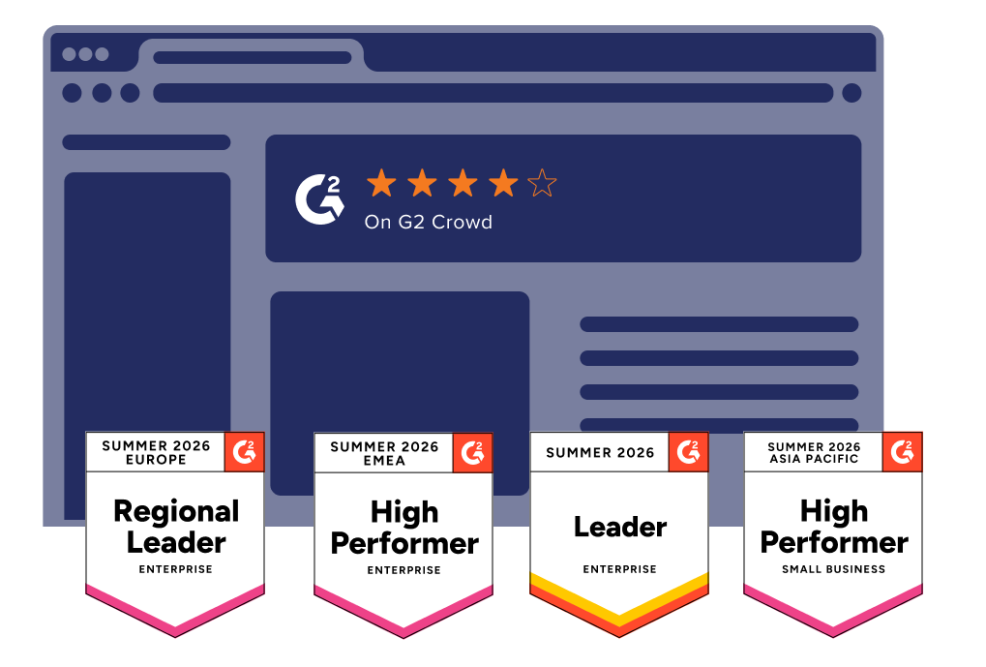
Leading the Pack

Acquia named a leader in Content Management by G2

Read the Reviews

Image
Browser window showing four award badges below
Frequently Asked Questions
What is a content management system?
A content management system (CMS) is software that helps teams create, edit, organize, and publish digital content without requiring coding skills. It separates content from presentation, enabling content creators, marketers, and developers to collaborate on a shared platform. CMS examples include Drupal, WordPress, Sitecore, and Adobe Experience Manager.
What are the top 5 CMS platforms?
The most widely used CMS platforms for enterprise organizations are Drupal (via Acquia), WordPress, Sitecore, Adobe Experience Manager, and Contentful. Each serves different use cases – Drupal and Acquia lead in government, healthcare, and large enterprise; WordPress dominates small-to-mid business; Sitecore and Adobe target enterprise personalization; Contentful serves headless, API-first architectures.
Is Acquia a CMS?
Yes. Acquia is a content management solution built on Drupal, the open-source CMS. Acquia Source CMS combines Drupal's content management capabilities with enterprise tools for digital asset management, personalization, multi-site governance, AI agents, and managed cloud hosting.
Are Acquia and Drupal the same?
No. Drupal is an open-source content management system. Acquia is the enterprise platform that makes Drupal work at scale – providing managed hosting, DAM, personalization, AI tools, and expert support. Acquia's founder created Drupal, and Acquia is the largest contributor to Drupal's open-source code.
Is a CMS the same as a CRM?
No. A CMS (content management system) manages the creation and publication of digital content. A CRM (customer relationship management) system manages customer data, sales pipelines, and communications. They serve different functions but are often integrated – the CMS delivers content, the CRM tracks the customer relationship. Sitecore, for example, is a CMS with some customer data features, but it is not a CRM.
Which CMS is best for beginners?
WordPress is often recommended for beginners due to its large plugin ecosystem and simple setup. However, for organizations that will scale beyond a simple site, starting with a more capable platform like Drupal CMS avoids costly re-platforming later. Acquia Source CMS makes Drupal beginner-friendly with low-code and no-code page building via Site Studio, while retaining the enterprise capabilities teams need as they grow.
What are the 4 components of a CMS?
The four core components of a content management system are: a content creation interface (the editor), a content repository (the database), a workflow and governance engine (drafts, approvals, permissions), and a publishing layer (the front end or API that delivers content to users). All four must work together for effective content management.
What is the most common type of CMS?
The most common type is the traditional (coupled) CMS, where content management and content delivery are handled by the same system. WordPress is the most widely deployed example, powering over 40% of websites globally. However, headless and hybrid CMS architectures are growing rapidly as organizations need to deliver content across multiple channels beyond the web.
Is Shopify a CMS?
Shopify is primarily an e-commerce platform, not a general-purpose content management system. While it includes basic content editing for product pages and blog posts, it lacks the content modeling, structured workflows, governance, and multi-channel delivery capabilities of a full CMS. Organizations that need both e-commerce and robust content management typically integrate Shopify with a dedicated CMS like Drupal.
What is Acquia used for?
Organizations use Acquia for enterprise content management, digital experience delivery, personalization, multi-site governance, digital asset management, and composable digital architectures. Acquia's platform is used by government agencies, healthcare systems, financial services companies, higher education institutions, and global brands to create and manage digital experiences at scale.

Ready to Get Started?

The CMS Built for What's Next

Create, manage, and deliver digital experiences across every channel with Acquia Source CMS – powered by Drupal, enhanced by AI, and built for enterprise scale.

Get Started Explore Acquia Source CMS