
Why Answer Engine Optimization (AEO) Is the Next Big Thing in Digital Strategy – And Why Most Brands Aren’t Ready

Collection :
Imagine a customer asks ChatGPT about the best financial planning software, or searches within Google’s AI Overview for sustainable fashion brands. The “answer” they get may never lead to a search results page, or to your website.
This is the reality of Answer Engine Optimization (AEO), the next major shift in digital visibility. Traditional SEO is no longer enough.
According to a new independent survey Acquia commissioned with Researchscape, marketers in the U.S. and U.K. overwhelmingly agree: Answer Engine Optimization (AEO) is poised to reshape digital strategy in the near future. Yet surprisingly few have taken action.
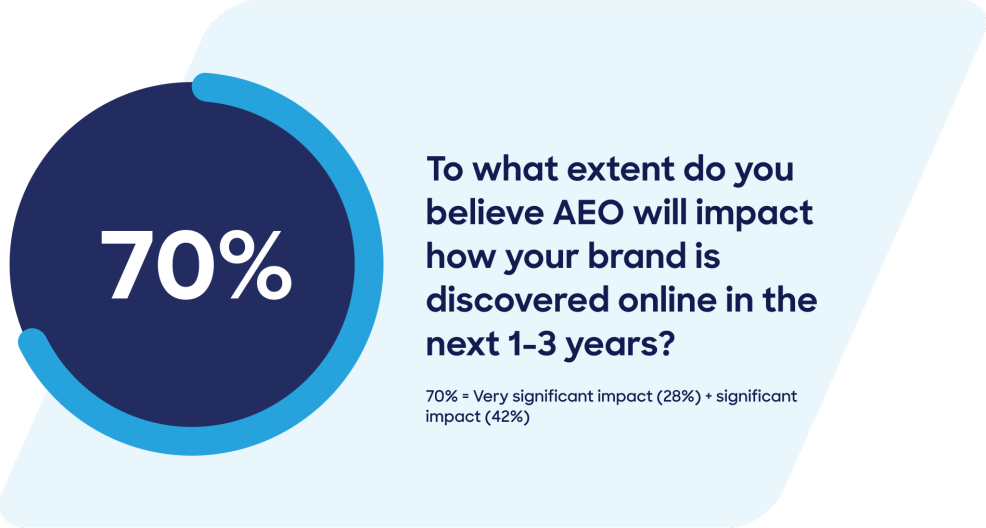
The survey of 500+ marketing professionals reveals a stark disconnect between awareness and execution. While 70% of respondents believe AEO will significantly impact their organization’s digital strategy within the next one to three years, only 20% have begun implementing it.
So what’s causing the lag and what can brands do about it?
What is Answer Engine Optimization (AEO) and Why Does it Matter?
AEO is the practice of optimizing digital content so that it is easily discoverable by AI-powered “answer engines” – think Google’s AI overviews, ChatGPT, Perplexity and other GenAI platforms that deliver direct answers, not just links.
With AEO here and now, marketers need to start evolving their websites as soon as possible. Our survey found that only 68% of marketers believe their websites will evolve to serve as a source of structured data for AI platforms. This shows us that 32% of respondents are in danger of being left behind.
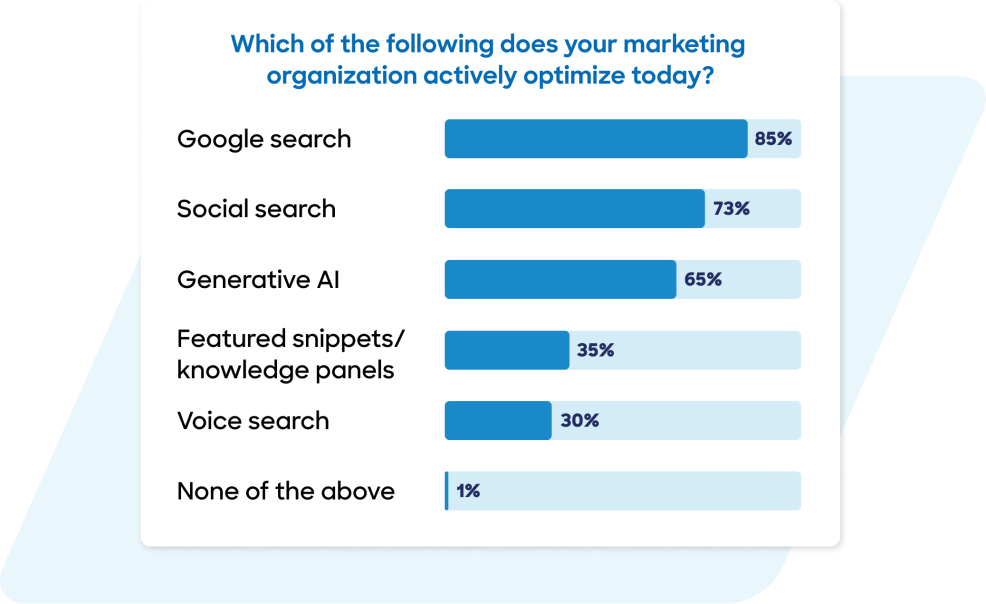
These tools are quickly becoming the first touchpoint into the buyer journey, especially as users shift from keyword-based searches to conversational queries.
The Cost of Inaction
Failing to optimize for answer engines isn’t just a missed opportunity, but a growing risk.
The study found that:
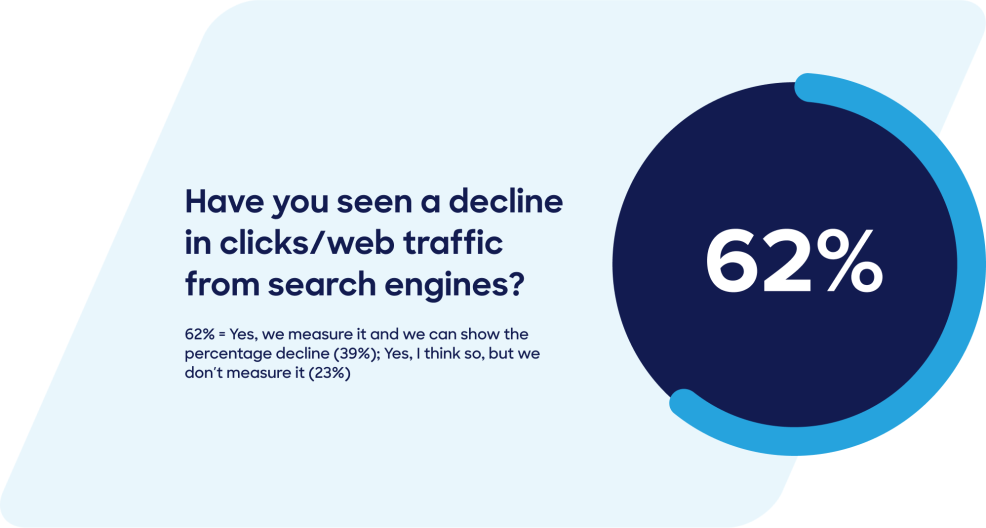
- 62% of respondents have seen a decline in clicks/web traffic from search engines, with 39% being able to show the percentage decline
- 45% cite budget constraints as the main barrier to AEO strategy adoption
- 40% struggle due to a lack of internal expertise
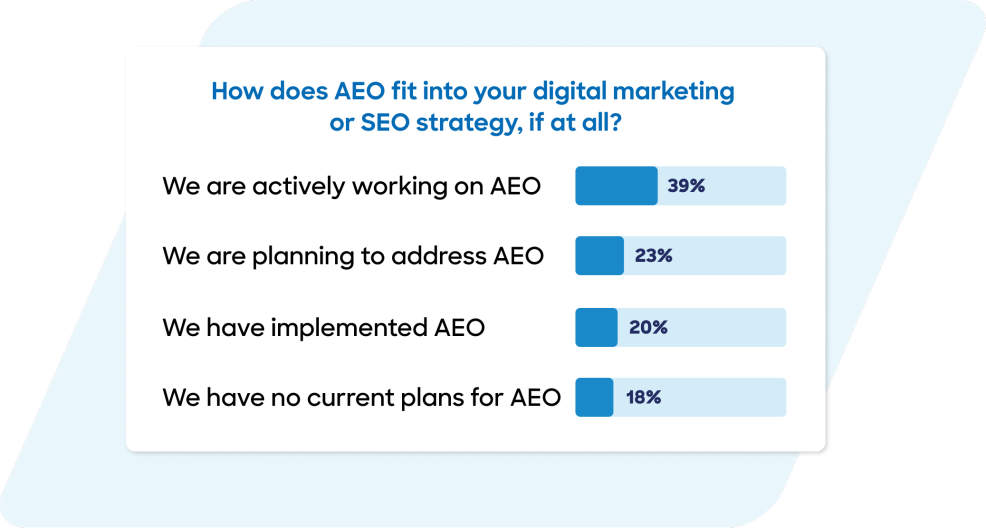
- Despite high confidence, only 20% of marketers have implemented an AEO strategy
- The biggest barriers to AEO adoption are budget constraints (45%), lack of internal expertise (40%), competing priorities (39%), and unclear ROI (38%)
- More than a third of companies, regardless of size, are unsure how much of their traffic is driven by large language models (LLMs)
Even more concerning? 18% of marketers have no current plans to address AEO, while 23% are in the early stages of planning.
Personalization and AEO: A Powerful Combination
One bright spot in the data: 51% of marketers identify personalization as the most important element of a successful content strategy moving forward. The right AEO strategy can enhance personalization by delivering precise, contextually relevant answers across touchpoints, something today’s consumers not only expect but demand.
How Acquia is Helping Marketers Adapt
Marketers told us their biggest blockers are budget, expertise, and clarity on ROI. That’s exactly where Acquia is focused:
- Providing an open, flexible platform that reduces cost and complexity
- Enabling teams to structure and govern content for answer engines
- Empowering personalization at scale, so every answer delivered strengthens the customer relationship
We believe the brands that succeed in the AI-first search era will be those that treat their websites not just as destinations, but as data sources for AI systems. Acquia is committed to helping marketers make that shift, whether by adopting new strategies, tools, or organizational practices.
As search evolves, so must your strategy. It’s time to start optimizing for answers.

Chief Market Officer Acquia