
One Platform for Every Digital Experience
Content management, digital assets, AI agents, and governance, unified in one open platform and connected to the tools your team already uses.
Beyond the CMS: What Changes When You Move to a Platform
WordPress VIP is built for publishing. But governing many sites, feeding AI agents structured data, and flagging every page for accessibility before it ships is where a CMS alone runs out of runway.
Acquia Source is what comes after: content, assets, AI agents, and governance in one open platform, connected to the tools you already use.

How Acquia Source Turned a Stalled Project Into a Quick Win
Costs cut by more than half, timelines cut from months to weeks, and a non-developer running the client demo, no bottleneck in sight.
What a Real Digital Experience Platform Delivers — Versus a Managed CMS
|
|
Acquia Source (built on Drupal)
|
WordPress VIP
|
|---|---|---|
|
Platform breadth |
Acquia Source unifies content management, Acquia DAM, AI agents, Acquia Web Governance, and Content Optimization on Acquia Cloud Platform, managed from one command center. |
A managed CMS. Digital asset management, governance, and analytics typically come from separate vendors and integrations. AI ships natively, but writes directly to the database and code, without human approval, an audit trail, or field-level permissions. |
|
Content creation |
Author in Acquia Source with drag-and-drop and AI assistance (Acquia AI, early access), and accessibility scanning built into the publish workflow. |
The Gutenberg block editor is strong for straightforward content. Complex enterprise content models can require custom development. |
|
AI governance |
AI proposes; a person approves. Every AI-generated change is reviewed before it goes live, with role-based permissions and a full audit trail. |
WordPress VIP ships agentic AI through its MCP Adapter and Abilities API. Review and approval of AI-driven changes before publish is configured separately. |
|
Digital asset management |
Acquia DAM is native to the platform, so assets surface inside the content workflow without context switching or a separate tool. |
No native DAM. Asset management typically requires a separate vendor and integration to maintain. |
|
Multi-site governance |
Acquia Multi-Experience Operations (built on Acquia Site Factory) governs many sites from a single codebase, with centralized deployment, brand governance, and security updates across the portfolio. |
Governing many WordPress sites is largely site-by-site. |
|
Security |
Drupal-native architecture, field-level permissions, and configuration tracked in Git. FedRAMP-authorized hosting, SOC 2 Type II, and ISO 27001. |
WordPress VIP holds a FedRAMP Moderate authorization for its hosting environment. That authorization does not extend to the third-party plugin and theme code that runs on top of it, where the majority of WordPress vulnerabilities originate (96%, per Patchstack 2024 data), and which remains the customer’s responsibility. |
|
Open architecture |
Connects to the martech your teams already use. Any MCP-compatible agent, including Claude, Cursor, and GitHub Copilot, can connect directly. |
A large plugin ecosystem, though plugin-based integrations add maintenance and fragmentation to manage over time. |
|
Accessibility and compliance |
Acquia Web Governance builds accessibility scanning into the publish workflow, so issues are flagged before pages go live. |
WCAG conformance is typically handled per site, without portfolio-level accessibility governance. |
|
Total cost of ownership |
Higher entry cost than consumer WordPress, with lower long-term total cost of ownership: managed updates and governed operations reduce the ongoing plugin-patching and maintenance burden. |
Lower entry price. Ongoing costs include plugin patching, security response, and site-by-site administration. |
What a Real Digital Experience Platform Delivers — Versus a Managed CMS
|
Acquia Source (built on Drupal)
|
WordPress VIP
|
|---|---|
|
Platform breadth |
Acquia Source unifies content management, Acquia DAM, AI agents, Acquia Web Governance, and Content Optimization on Acquia Cloud Platform, managed from one command center. |
A managed CMS. Digital asset management, governance, and analytics typically come from separate vendors and integrations. AI ships natively, but writes directly to the database and code, without human approval, an audit trail, or field-level permissions. |
|
Content creation |
Author in Acquia Source with drag-and-drop and AI assistance (Acquia AI, early access), and accessibility scanning built into the publish workflow. |
The Gutenberg block editor is strong for straightforward content. Complex enterprise content models can require custom development. |
|
AI governance |
AI proposes; a person approves. Every AI-generated change is reviewed before it goes live, with role-based permissions and a full audit trail. |
WordPress VIP ships agentic AI through its MCP Adapter and Abilities API. Review and approval of AI-driven changes before publish is configured separately. |
|
Digital asset management |
Acquia DAM is native to the platform, so assets surface inside the content workflow without context switching or a separate tool. |
No native DAM. Asset management typically requires a separate vendor and integration to maintain. |
|
Multi-site governance |
Acquia Multi-Experience Operations (built on Acquia Site Factory) governs many sites from a single codebase, with centralized deployment, brand governance, and security updates across the portfolio. |
Governing many WordPress sites is largely site-by-site. |
|
Security |
Drupal-native architecture, field-level permissions, and configuration tracked in Git. FedRAMP-authorized hosting, SOC 2 Type II, and ISO 27001. |
WordPress VIP holds a FedRAMP Moderate authorization for its hosting environment. That authorization does not extend to the third-party plugin and theme code that runs on top of it, where the majority of WordPress vulnerabilities originate (96%, per Patchstack 2024 data), and which remains the customer’s responsibility. |
|
Open architecture |
Connects to the martech your teams already use. Any MCP-compatible agent, including Claude, Cursor, and GitHub Copilot, can connect directly. |
A large plugin ecosystem, though plugin-based integrations add maintenance and fragmentation to manage over time. |
|
Accessibility and compliance |
Acquia Web Governance builds accessibility scanning into the publish workflow, so issues are flagged before pages go live. |
WCAG conformance is typically handled per site, without portfolio-level accessibility governance. |
|
Total cost of ownership |
Higher entry cost than consumer WordPress, with lower long-term total cost of ownership: managed updates and governed operations reduce the ongoing plugin-patching and maintenance burden. |
Lower entry price. Ongoing costs include plugin patching, security response, and site-by-site administration. |
Three Things That Make Acquia Different

One Platform, Not Five Vendors
Content management, digital assets, AI agents, governance, and analytics in one platform and one environment. No integration tax, and no context switching.

Fast AI, Full Governance
AI proposes. A person approves. Every AI-generated change is reviewed before it goes live, and field-level permissions block unauthorized edits. Marketing-speed AI, IT-grade governance.

Open by Design, Not by Accident
Built on Drupal. Your content, code, and data stay yours. Any MCP-compatible AI agent, including Claude, Cursor, and GitHub Copilot, plugs in directly. No plugin dependency, and no vendor lock-in.
Customer Evidence
Conagra Brands
"It's refreshing to use a platform that eliminates the complexities of backend management. With Acquia managing updates, we're not just saving time — we're setting ourselves up for significantly lower operational costs and a more efficient future." — Will McClung, Senior System Analyst, Conagra Brands
Elevated Third (Agency)
"Acquia Source gives us a solid SaaS foundation to build opinionated, lead-gen websites faster. For our B2B clients, it means less overhead, faster time to value, and smoother integration with the rest of their marketing stack." — Jeff Calderone, CEO, Elevated Third
Built for Organizations That Cannot Afford to Get It Wrong
Acquia is the right platform for organizations that:
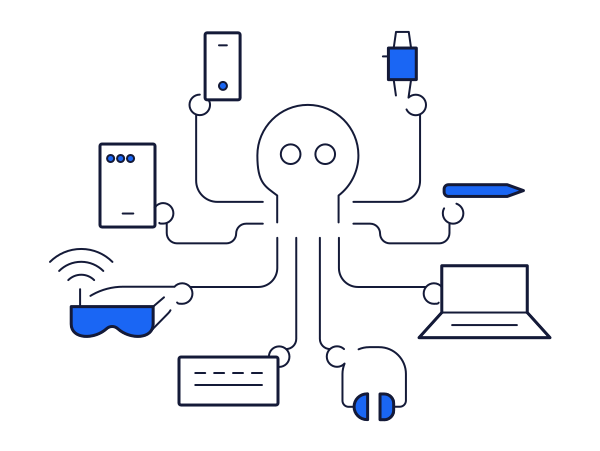
- Want to eliminate vendor sprawl: content management, digital assets, governance, and AI in one open platform
- Run multiple sites or brands and need centralized governance without sacrificing local flexibility
- Are deploying AI agents and need auditability, human-in-the-loop controls, and IT-defensible permissions
- Are in regulated industries — healthcare, financial services, federal government, and education — where compliance and security are non-negotiable
- Are outgrowing what a managed CMS can do and need a true digital experience platform
Trusted Across Regulated Industries
Federal Government
Acquia Cloud Platform is FedRAMP-authorized. Drupal runs 150+ federal .gov domains (GSA Site Scanning) — a FedRAMP ATO covers the hosting environment, not the plugin code layered on top.
Higher Education
Title II WCAG 2.1 AA deadlines are approaching, and centralized template governance is an efficient path to portfolio-wide accessibility.
Healthcare and Financial Services
SOC 2 Type II, ISO 27001, and HIPAA-eligible. Structured content governance, field-level permissions, and audit trails that meet the documentation requirements of regulated environments.
One Platform. Open Architecture.
Built for What Comes After the CMS Decision.
Acquia Source brings content management, digital assets, AI agents, and governance together in one open platform, so your teams can build faster, scale confidently, and ship knowing every experience is right.
See Acquia Source Talk to an Expert
WordPress VIP is a trademark of Automattic Inc. Claude, Cursor, and GitHub Copilot are trademarks of their respective owners. Comparative statements reflect Acquia Compete assessment as of July 2026.