

The Talent Base Is the Roadmap: Teaching the First Drupal in a Day in North America

Collection :
"Experiences like this go beyond just learning a platform — they shape how I think about technology as a whole."
— Mustafa Hasan, Drupal in a Day Chicago 2026 attendee
That's a student speaking after spending one day with Drupal for the first time. He didn't say "I learned a new tool." He said his thinking changed. That distinction is worth sitting with, because it points directly at the strategic question every organization that builds on open source should be asking right now.
Here's the thesis: as AI rapidly lowers the barrier to building on any platform, a CMS's long-term competitive advantage will not come from its feature set. It will come from the depth and breadth of its human ecosystem. When enterprises bet on Drupal for their most critical digital work, they're not just buying software — they're buying access to a community that knows how to solve hard problems, keeps growing, and compounds in value over time. Drupal in a Day is a deliberate investment in that compounding. And that's what made last Thursday, at DrupalCon Chicago, feel like more than a training event.
From Utrecht to Vienna to Chicago
Drupal in a Day grew out of the Drupal Open University Initiative, championed by Hilmar Hallbjörnsson (Drupalviking), who asked a deceptively simple question: could we condense a meaningful Drupal education into a single day and bring it to students at local universities — not just existing conference attendees? The first iteration ran at DrupalJam in Utrecht in May 2025. By October, it had scaled to DrupalCon Vienna, where 60 students showed up and every single one stayed until the end. Forty percent of attendees were women — a stat that still strikes me as one of the best things to come out of that day.
I co-presented in Vienna alongside Hilmar, and when he wrote about the experience, he named me as the lead for the Chicago iteration. Reading that felt like a torch being passed. I've been in this community for 20 years — long enough to know how compounding works, and long enough to take that kind of trust seriously.
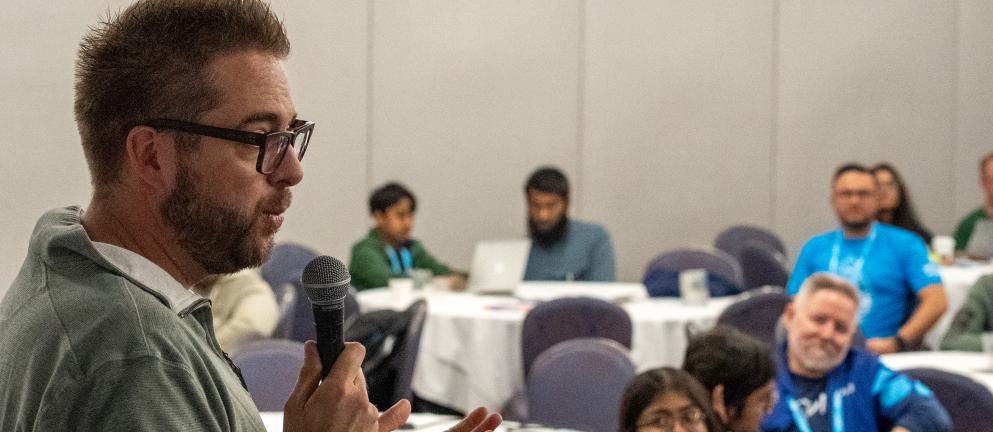
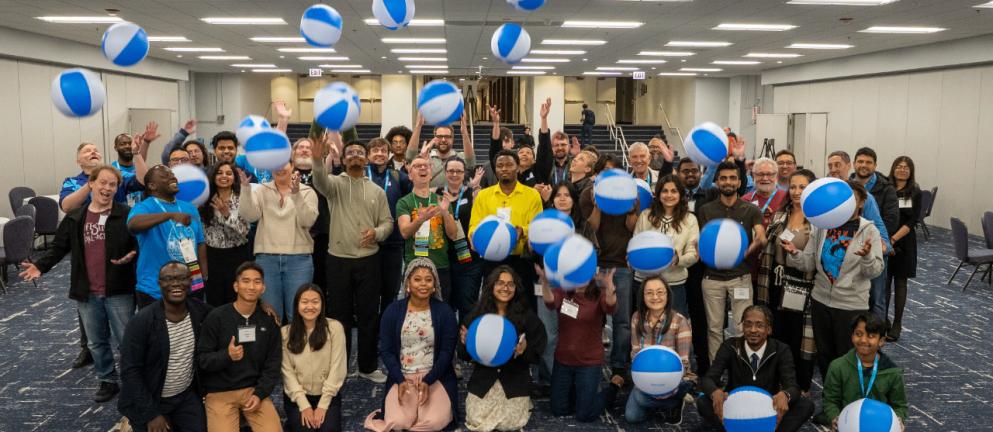
On March 26th, the contribution day of DrupalCon Chicago, Drupal in a Day crossed the Atlantic for the first time. The event was organized with tremendous care by Kwasi Afreh and his team of volunteers. It opened with remarks from Monica "Nikki" Flores (monicadear) and closed with words from Dries Buytaert, Drupal's founder and Acquia's co-founder. That arc — from community welcome to a founder's close — wasn't incidental. It was a signal about how seriously the entire ecosystem takes this program.
AI Is Already Deciding the Next Platform War
Here's what I didn't fully anticipate: how much the AI conversation would infuse the energy of the day.
We showed demo videos of AI capabilities within Drupal — content generation assistance, intelligent workflows, integrations that are moving from experimental to expected. The audience response wasn't passive excitement. It was active calculation. You could see people working out what it meant for their projects, their teams, their career paths.
That response crystallized something I think the industry hasn't fully reckoned with yet. Within a few years, the question won't be whether your CMS has AI features — they all will. WordPress will have them, Contentful will have them, every cloud-native headless option will have them. Feature parity on AI is a race that every platform is running simultaneously, and it won't be a differentiator for any of them.
What will differentiate platforms is the ecosystem around them: the depth of community knowledge for governing AI responsibly, the breadth of integration patterns that practitioners have already solved, the availability of people who understand both the technology and the organizational context it operates in. That's not something a product team can ship. It has to be grown.
This is why I'm building more into the curriculum. The Chicago iteration showed demos. The next one — which I'll be teaching at Drupal Dev Days 2026 in Athens — will include structured, hands-on AI exercises. Not walkthroughs. Actual practice. The goal is to produce practitioners who don't just know Drupal has AI capabilities, but know how to deploy them in enterprise contexts. That's the skill that will matter, and it's the one that has to be taught person to person.
Teaching Drupal CMS 2 for the First Time
Chicago was also a personal first: my first time teaching Drupal CMS 2 and Drupal Canvas. Teaching something new has a clarifying effect — you can't coast on familiarity, and every student question reveals a gap you hadn't noticed.
What the curriculum made clear is how significantly the experience has evolved. Drupal Canvas genuinely narrows the distance between intention and execution in ways that matter for the kinds of learners we're reaching. Students from computer science, design, media, business, and bioengineering all left with a functioning website and a participation certificate. They also left, as Mustafa put it, thinking differently about technology.
That's the outcome worth designing for — and it's the one that's hardest to replicate with documentation or video courses. It requires a room, an instructor, and a conversation.
What Acquia Is Betting On — and What It's Choosing Not to Do
Acquia was the presenting sponsor of Drupal in a Day at DrupalCon Chicago, and I want to be precise about what that represents strategically — because it's a more interesting choice than it might appear.
Most enterprise software vendors invest their community budget in developer relations: conference talks, technical blog posts, co-marketing with system integrators. That's a reasonable approach — it reaches people who already know the platform and deepens their engagement. What it doesn't do is grow the supply of people entering the ecosystem in the first place.
Acquia is making a different bet. By sponsoring a program designed explicitly for students and newcomers — people who arrived not knowing what Drupal was — the company is investing in the top of the funnel in a way that takes years to pay off. That's not the typical enterprise software playbook. It reflects a specific conviction: that Drupal's long-term enterprise position depends not just on the sophistication of current practitioners, but on the size and diversity of the community that's coming next.
Nearly five years at Acquia have shown me how seriously the company takes this. Co-founded by Dries alongside the project itself, Acquia occupies a position no other vendor in the ecosystem does: deep enough in the platform's origins to understand what it's capable of, and close enough to enterprise customers to know what they actually need. When those two things align around community education, it's worth paying attention to.
Dries's closing remarks weren't ceremonial. They were a signal that growing the Drupal practitioner base is a shared priority — not just for one company, but across the project and the commercial ecosystem together.
Infrastructure, Not Charity
One of the things Hilmar got fundamentally right: Drupal in a Day should not depend on any one person. The curriculum is open, the materials are shareable, and any experienced practitioner with teaching skills can run it at their local Con or Camp. The Drupal Association is reinforcing this with Study Badges in development on drupal.org — so attendance at Drupal in a Day becomes a formal credential, visible to employers.
That's the detail that elevates this from a nice community initiative to actual infrastructure. A credential that follows a learner into the job market doesn't just benefit the individual — it creates a legible signal for hiring organizations, which makes Drupal talent more discoverable and the ecosystem more navigable at scale. That's the kind of compounding the open source model is uniquely good at producing.
The Question Every Drupal Organization Should Be Asking
Here's the version of the conclusion that I think is actually worth writing down: generosity in the Drupal community has always been real, but generosity alone doesn't explain why this ecosystem has lasted and grown. What makes it durable is that helping someone learn Drupal is also rational — you're not just being kind, you're adding to the shared resource that makes every Drupal project easier to staff, every enterprise conversation easier to have, and every new contribution more likely to find a reviewer.
Drupal in a Day is built on that logic. And I think it points toward a specific prediction: the Drupal organizations that will be best positioned in five to ten years — the ones enterprises will trust with their most important digital infrastructure — won't just be the ones with the best technical talent. They'll be the ones that treated community education as a core business function rather than a side project.
The question isn't whether you believe that. The question is whether you're acting on it.
I'm Martin Anderson-Clutz, known as mandclu in the Drupal community. I've been building with Drupal for 20 years and have been with Acquia for nearly five. If you have questions about Drupal in a Day, Drupal CMS 2, or the Drupal Open University Initiative, I'd love to connect.