

Meeting the AI Moment: Ethical and Practical Insights from the DrupalCon AI Summit

Some of the most impassioned conversations about using AI in Drupal right aren't about what or how you can use the two together, but about why you might, and the ethical implications of those decisions. Earlier this week I attended the AI Summit at DrupalCon Chicago, which included a number of interesting perspectives on how the Drupal community is adopting Artificial Intelligence, and meeting the moment as it becomes increasingly pervasive.
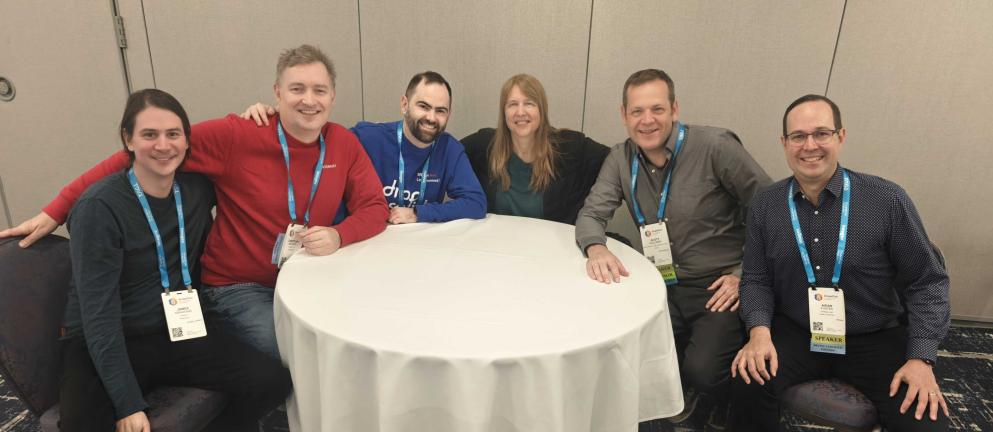
The AI Strategic Initiative Panel included a number of luminaries from the Drupal AI Initiative, including Jamie Abrahams, Matthew Saunders, Glenn Hilton, Paul Johnson, and Kristen Pol. A particularly interesting moment for me was when someone asked about the ethical concerns being raised about the use of AI, including its role in displacing many current jobs, as well the environmental impact. Jamie Abrahams of FreelyGive pointed out that during the Industrial Revolution, original Luddites weren’t actually opposed to the adoption of new technology. They were opposed to the way industrialization was being used to produce cheap but inferior products, and more importantly often created unsafe working conditions for the people working in the factories. Today many of us still benefit from the reforms they fought for. In a similar way, during this AI moment we should listen to and value the concerns of people who worry about the societal and environmental impacts of AI. As a community, we should commit to developing for the use of AI to augment rather than replace humans, and do our best to use the leanest LLM that can effectively deliver on any particular task, as examples of ways we can be conscientious in our adoption of this transformative technology. At Acquia, this is a conversation we're actively having internally - how do we build AI-powered products that augment what our customers can do, rather than remove the human judgment that makes their work meaningful. All the while maintaining the guardrails that ensure customer data is never used to train models.
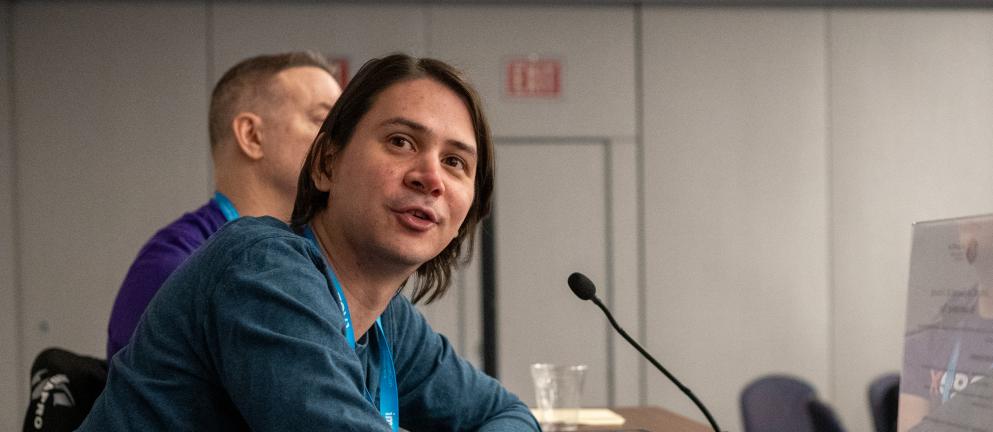
The thoughtful discussion about ethics and AI continued with talks by Michael Schmid (schnitzel) of amazee.io about the importance of data sovereignty in AI, Dave Hansen-Lange (dalin) of Four Kitchens imploring us to bring AI intelligence into website experiences, rather than letting it replace them, and a Moderated Group Discussion on Ethics and Governance.
The afternoon sessions took a more pragmatic tone, exploring the ways AI is already changing the ways we work. Richard Nosek of ImageX explored the ways in which AI is changing the human connections that are fundamental to marketing, including the buyer journey, and Laura Garling and Bec White of Palantir shared their experiences working in a cross-functional team to develop an AI product capable of significantly accelerating content audits that are a crucial but often time consuming part of a website rebuild migration. Finally, Acquia’s own Scott Falconer provided a practical framework to start getting measurable results by adding AI to your Drupal processes.
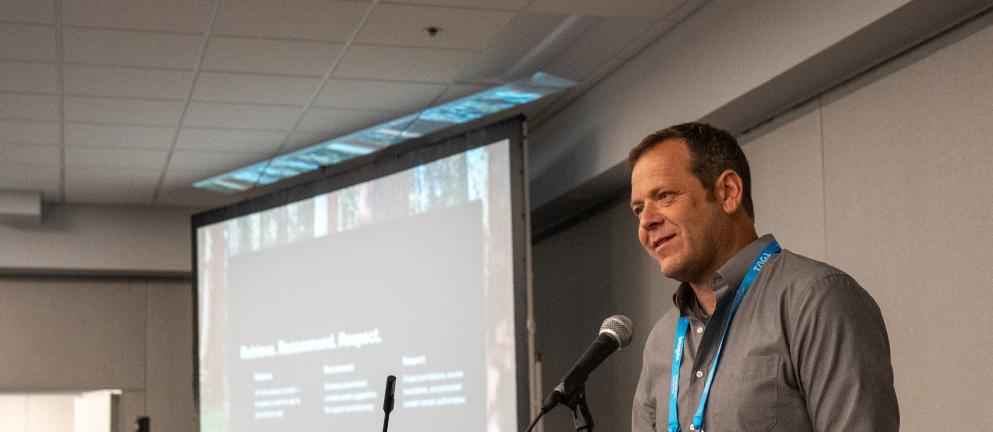
First, Scott encouraged the audience to think of AI as an alien coworker: smart and fast executing even complex tasks, but lacking common sense and other kinds of context many humans take for granted. A similar analogy I’ve heard is to treat AI like a PhD graduate on its first day on the job. Given clear and explicit instructions (and feedback), as well as careful guardrails, your alien coworker can be a valued contributor to the team.
Next, Scott pointed out that Drupal is an ideal companion for AI not just because it uses structured content, but also becuase its robust governance and workflow capabilities allow us to focus the immense capabilities of AI on the time-consuming parts of a common tasks, within constraints like permissions, validation, and so on. That allows the people in the process to focus on where they add the most value: exercising judgement. For example, does the generated text, tell a true story, a strategic story, an engaging one?
Finally, while Scott encourages team to eventually use AI on a small number of “big bets”, he encouraged teams just starting out to start out with just one workflow. Ideally something used often enough to have a measurable impact when it’s optimized, with existing guardrails in place, and reviewable enough to trust.
As a longtime Drupalist and Acquian wanting to make sure Drupal can meet the moment, hearing Scott articulate a clear framework for AI agents built on structured Drupal data felt like watching our own thinking get a name. If your team is considering adopting (or growing your adoption of) AI tools to amplify your results, DrupalCon Chicago was filled with insights around how and why Drupal is the perfect companion.