

AI and the Future of Digital Sovereignty: Lessons from Athens

Collection :
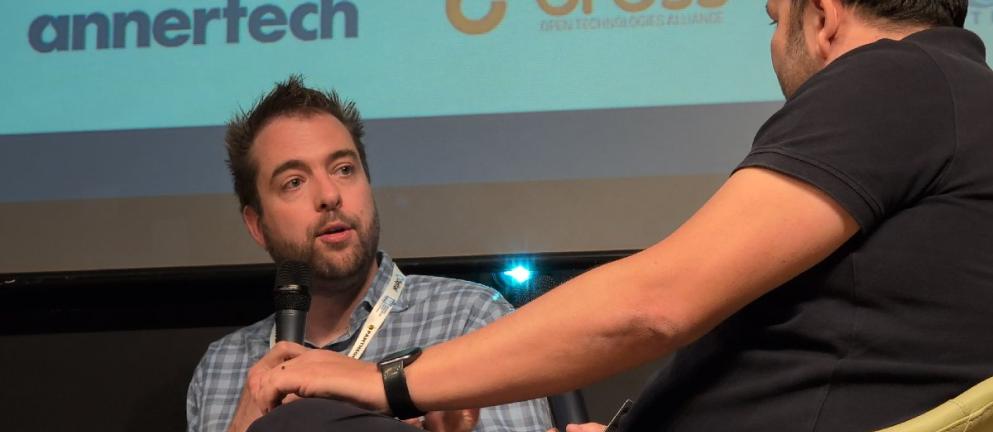
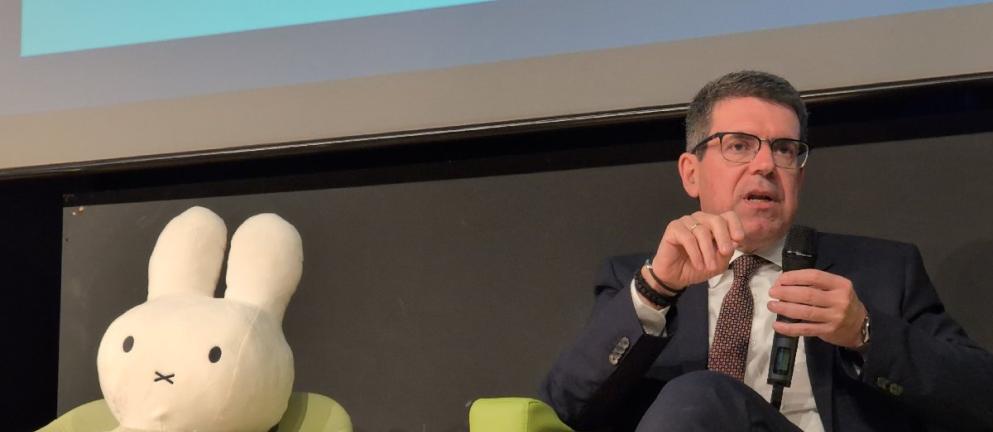
At the recent Drupal Dev Days 2026 in Athens, a fireside chat brought together two distinct yet converging worlds: the visionary tech leadership of Dries Buytaert, founder of Drupal and Executive Chair at Acquia, and the pragmatic digital governance of Professor Dimosthenis Anagnostopoulos, Greece's General Secretary of Digital Governance. The spirited conversation was moderated by Tassos Koutlas, the CTO of DropSolid AI.
The conversation moved beyond code, tackling the high-stakes debate over how nations and organizations can maintain control in an increasingly connected, AI-driven world.
Redefining Digital Sovereignty
For many, "sovereignty" is a political buzzword. For Prof. Anagnostopoulos, it is a technical and strategic necessity. Greece has adopted a "cloud-first" and "multi-cloud" strategy since 2020 to balance high-intensity on-prem processing with the features of public cloud providers.
However, true sovereignty is often at odds with the convenience of the public cloud. As the Professor noted:
"Actually, sovereignty means that you can move from having strong barriers between systems... to solve air gaps. And on the other hand, have software mechanisms or even hardware mechanisms to achieve sovereignty".
He warned that relying on public cloud components means being "highly dependent on components that you cannot control yourself". To be fully sovereign, one theoretically needs all components installed on-prem—an endeavor that is both "extremely costly" and difficult to achieve.
Why "Buying European" Isn't Enough
Dries Buytaert offered a provocative counter-perspective on how to achieve this independence. While many argue that "buying European" software is the path to sovereignty, Dries argues this is a fallacy if the software is proprietary.
He cited Skype as a cautionary tale: a European company that became non-sovereign overnight when it was acquired by eBay.
"Digital sovereignty comes not down to where the headquarters are of a company. It comes down to: do you have the control over the software so that when something changes, you know, you don't lose control".
Dries even proposed a controversial "sovereignty scale," arguing that Drupal running on AWS in Europe could be more sovereign than a proprietary European app on a European cloud because the switching costs for open source are significantly lower. If a provider changes their terms, you can move a Drupal site in a day; moving a proprietary stack could take months or years.
Open Source as Public Infrastructure
If open source is the key to sovereignty, why is it so underfunded? Dries pointed out a glaring gap in the European Commission's Cloud Sovereignty Framework, which currently assigns only a 4% weight to open source in its grading formula.
He argues that open source should be treated like other vital public goods—such as roads, schools, or the military—which often begin as volunteer efforts before requiring government support.
- The Value Gap: Open source creates roughly $8.8 trillion in value, yet its maintenance remains "fragile" and dependent on a few individuals.
- The Funding Solution: Dries proposed that governments should provide direct funding for critical projects.
- Procurement Reform: He suggested making "open source contribution" a weighted criterion in government contracts, rather than choosing vendors based solely on the lowest price.
Greece’s AI Ambition: Pharos and Daedalus
Greece is not just debating these concepts; it is building them. The country is currently developing Pharos, an AI ecosystem powered by the Daedalus supercomputer.
This "AI Factory" is one of seven being built across Europe and aims to provide sovereign AI resources to SMEs, startups, and universities at minimal cost.
- Focus Areas: The ecosystem will focus on health, sustainability, civilization, and—crucially—Greek language models.
- Vision 2030: The goal is to transform Greece into an "innovation nation" where AI enables every major digital service provided to citizens through Gov.gr.
The AI "Autopilot" for Developers
The session concluded with a look at how AI is disrupting the "Drupal Triangle" (Software, Ecosystem, Community). While some in the community have called for banning LLM-generated code, Dries took a more pragmatic, "pro-human" stance.
He compared using an LLM to a pilot using autopilot:
"The solution isn't to ban the tools. The solution is to keep humans accountable for the results of these tools... You shouldn't use a tool like LLMs unless you know how to do the job without the tool".
Key Takeaways for Leaders:
- Sovereignty = Control: Location of headquarters matters less than your ability to fork or move your software.
- Contribute to Prosper: Organizations that use open source must move from being "users" to "contributors" to ensure the reliability of their own infrastructure.
- AI as an Amplifier: Use AI to increase velocity, but maintain strict human accountability for the output.
As Prof. Anagnostopoulos noted, we are moving toward a world where everyone will have a personal AI assistant. Whether that assistant works for the user or a hidden proprietary interest depends entirely on the choices we make regarding digital sovereignty today.